Mardin, Turkey
Building on the ridge
The stone is the wall, and the water comes off the roof.
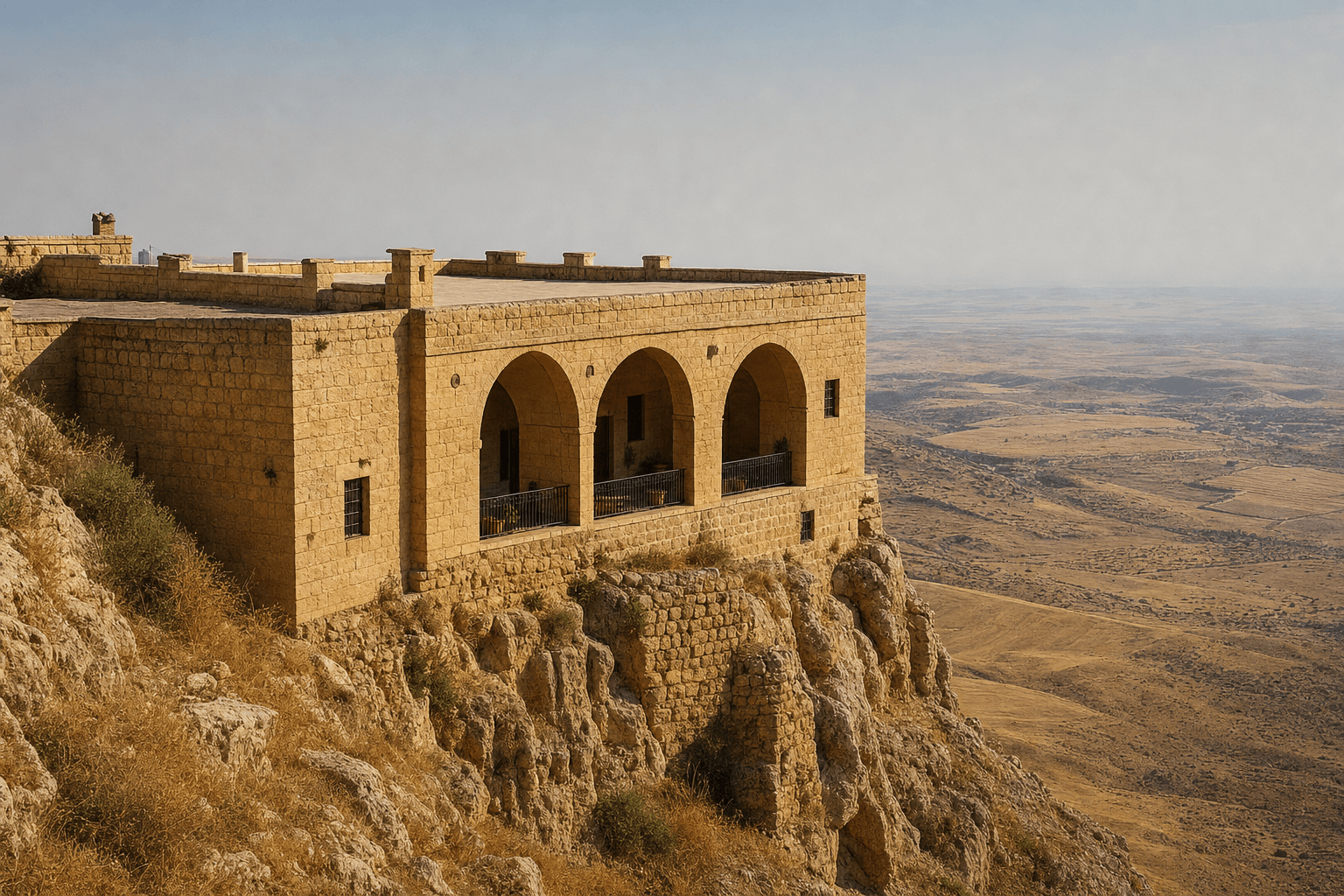
Mardin stands on a limestone ridge. The summer is dry and very hot. The winter is cold, and the rain and snow come in that season. The old house stays closed to the street, because the street is narrow and steep and the view is not there. The house opens south, onto the plain. The flat roof is both the terrace and the place where water is gathered. A tile roof, an olive and a pool facing the plain would make the house a copy of another coast, not of this ridge.
- Ridge
- Limestone, high
- Aspect
- South, the plain
- Stone
- Local, thick
- Water
- From roof to cistern
The ridge
The house faces the plain
The old street in Mardin is narrow and steep. The wall opposite is close. A wide sheet of glass to the street does not give the plain. It brings in the house across the way, and in winter the wind on the ridge. The view is to the south. The plain is there. The opening is built on that side, with the depth of the stone itself.
When the noon sun is high, that depth cuts the glare. In winter the sun is low, and the same depth lets the light into the room. A thin frame holds the summer heat against the glass. The opening to the street stays small.
Stone
The wall is not a cladding
Mardin stone is the limestone the city is cut from. The wall is that stone itself. It is not stuck on as a thin plate over something else. Thick stone lets the day’s heat into the room toward evening. By then the ridge has started to cool.
Paint that cannot breathe, or a cement plaster, spread over the stone, makes it blister and fall. The joint is lime. White marble does not take the place of this stone.
Materials
Local limestone
This is the wall itself. It is not stuck on as a thin facing. Thick stone holds the heat back until evening.
Lime
It does not stop the stone from drying. Cement plaster and paint that cannot breathe blister the stone.
Flat roof
It is walked on. Its fall and spout carry the winter water down to the cistern.
Stone opening
On the south it is deep. It cuts the noon sun and lets the winter light in. The opening to the street stays small.
Cistern
The roof’s water stays here. A pool open to the south does not do this work.
The roof
The water comes off the roof
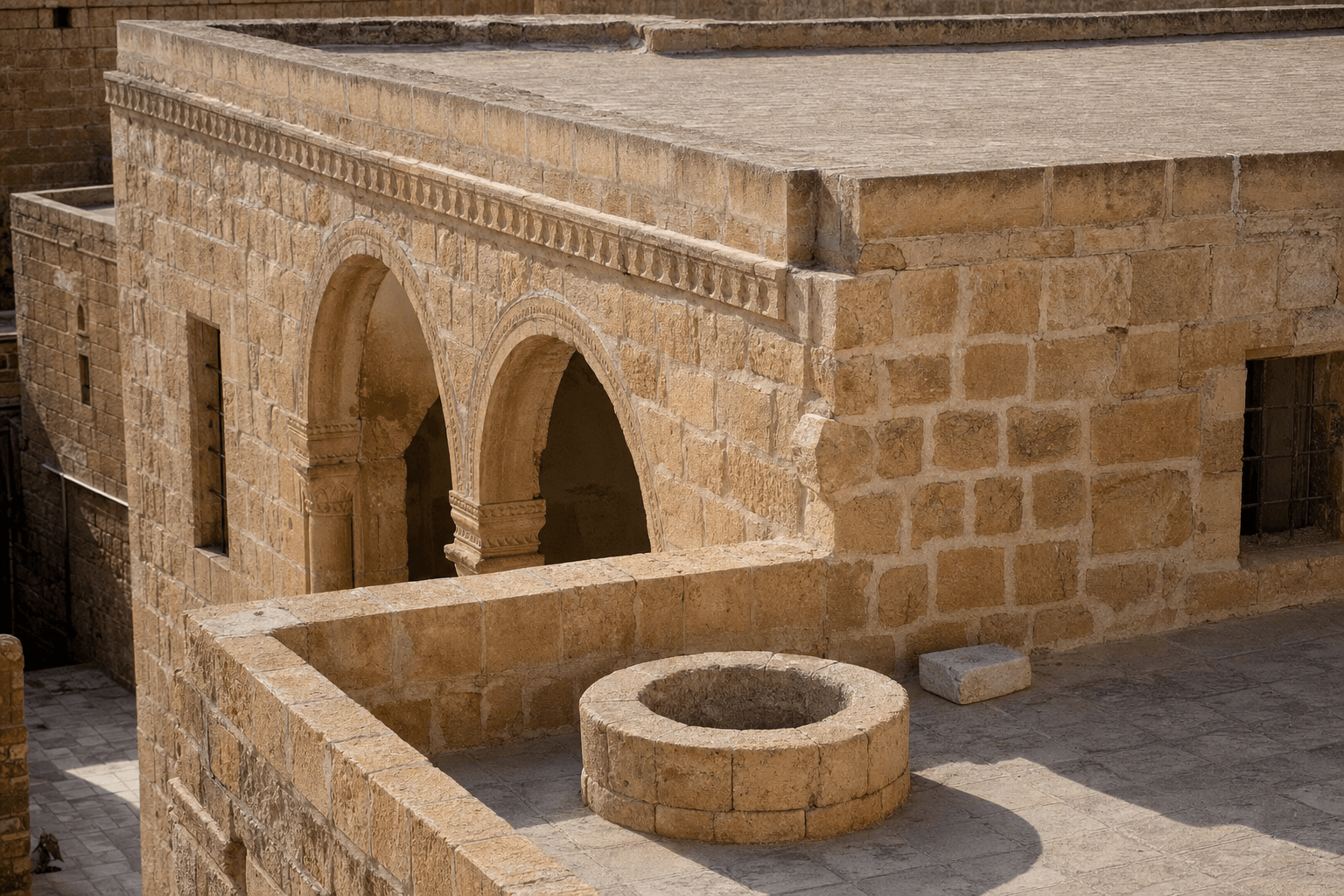
The roof of the old house is flat, and it is walked on. Summer evenings are spent there. In winter the rain and the snow fall on the same face. The roof has a fall and a spout. Water goes from that spout into the cistern in the court. A roof with no fall leaves the water standing on the stone.
A tile roof carries the water down, but it removes the terrace and the cistern’s supply. A wide pool open south, toward the plain, throws the afternoon sun back onto the glass and leaves the water this city stored sitting in the open. Where water is wanted, it stays in the cistern.
House Doctor notes
What works
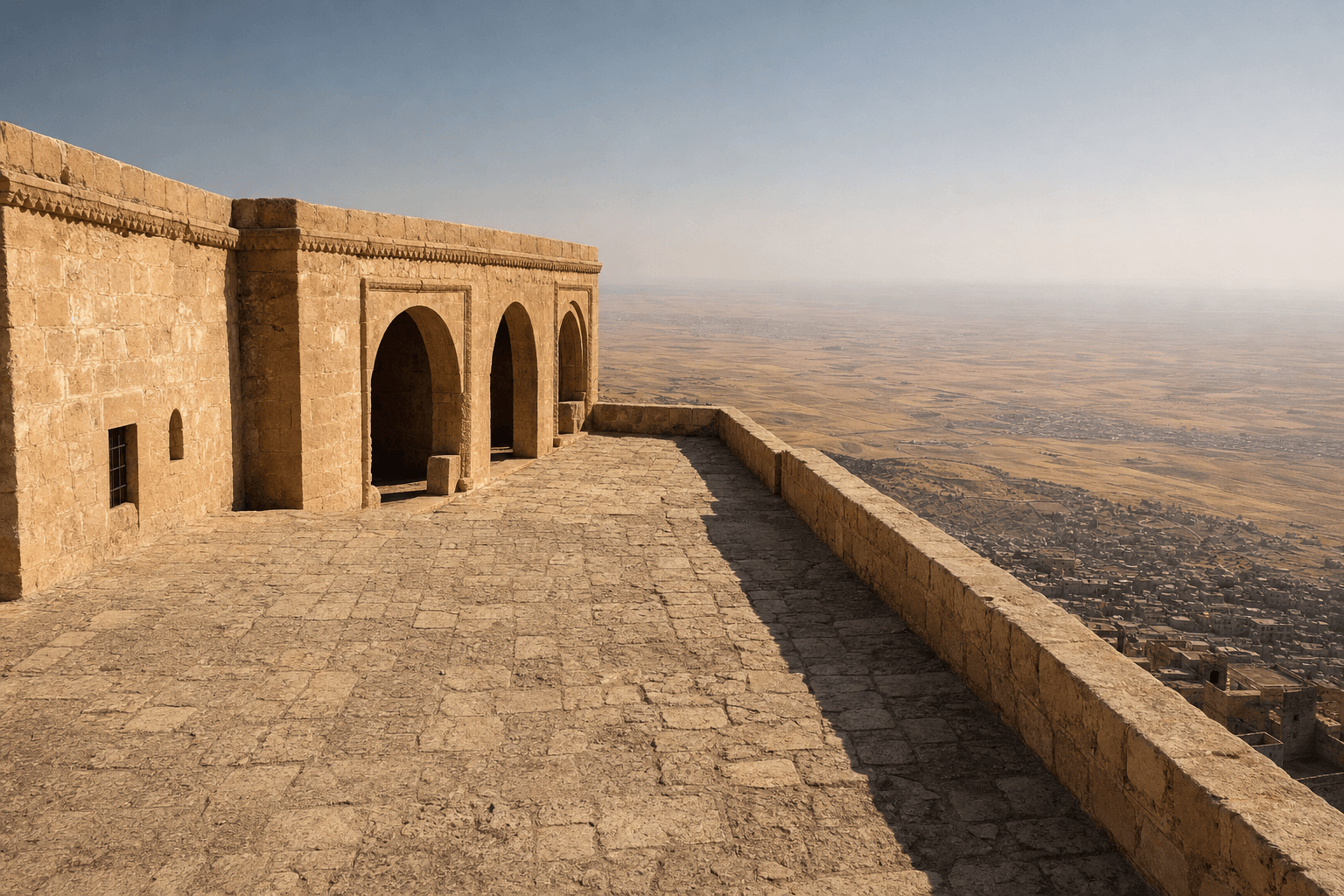
The house faces the plain. The opening to the street stays small. The wall is thick limestone. The opening is deep. The roof has a fall, and the water goes to the cistern. The joint is lime.
Watch
A tile roof and an overhang made for the Aegean do not do the work of the roof and the cistern on this ridge. Cement plaster blisters the stone. A roof with no fall leaves the winter water standing on the stone.
This place
The essay is for the limestone ridge that faces the plain. A Bodrum slope and an Ayvalık shore street are not copied here. The summer is dry and hot. The winter is cold.
In the same place
Beside Mardin
- Midyat
- Savur
- Mazıdağı