Ayvalık, Turkey
Building a stone house
Light comes from the court, and the olive stays.
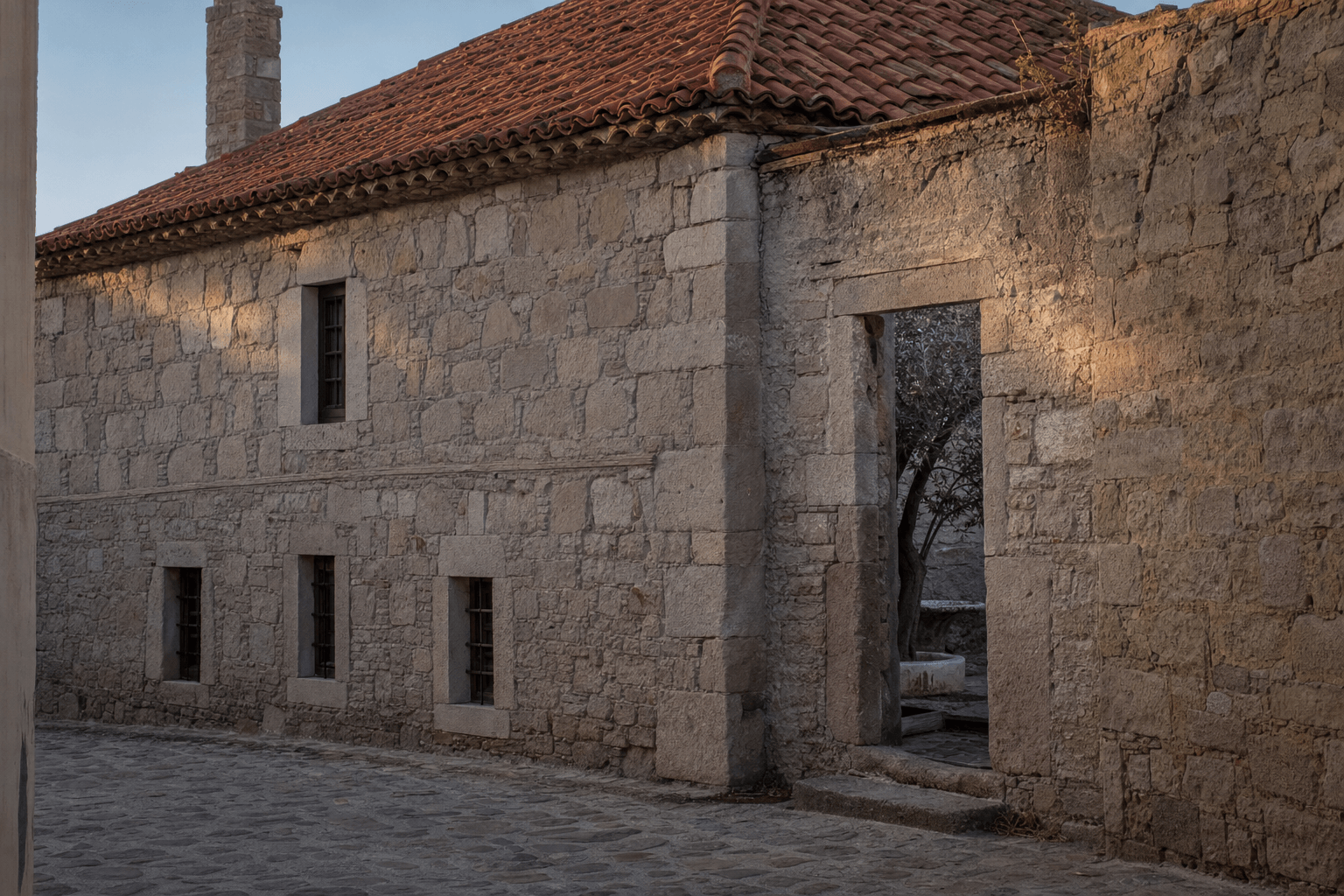
Ayvalık lies in the north of the Aegean. The summer is hot, and the rain comes in winter. The old house keeps a small window to the street, because the wall opposite is close and the light does not come from there. Light falls into the court over a high stone wall. The wind off the sea passes through that court as well. If the olive is cut and a lawn and a pool open to the sea are put in its place, the house becomes a copy of another coast.
- Court
- Narrow, stone, shaded
- Stone
- Local, thick
- Roof
- Clay tile
- Olive
- It is not cut
The lane
The light does not come from the lane
The old lanes of Ayvalık are narrow. The wall opposite is close. A wide sheet of glass to the lane does not give a view. It brings in the winter rain and the wall of the house across the way. Light falls over the high stone wall of the court. The room is lit from there.
This is not the order of a villa on a Bodrum slope. There, an overhang cuts the noon sun off the south glass. Here the glass belongs to the court. The opening to the lane stays small. Privacy and rain are both held at that edge.
Materials
Local stone
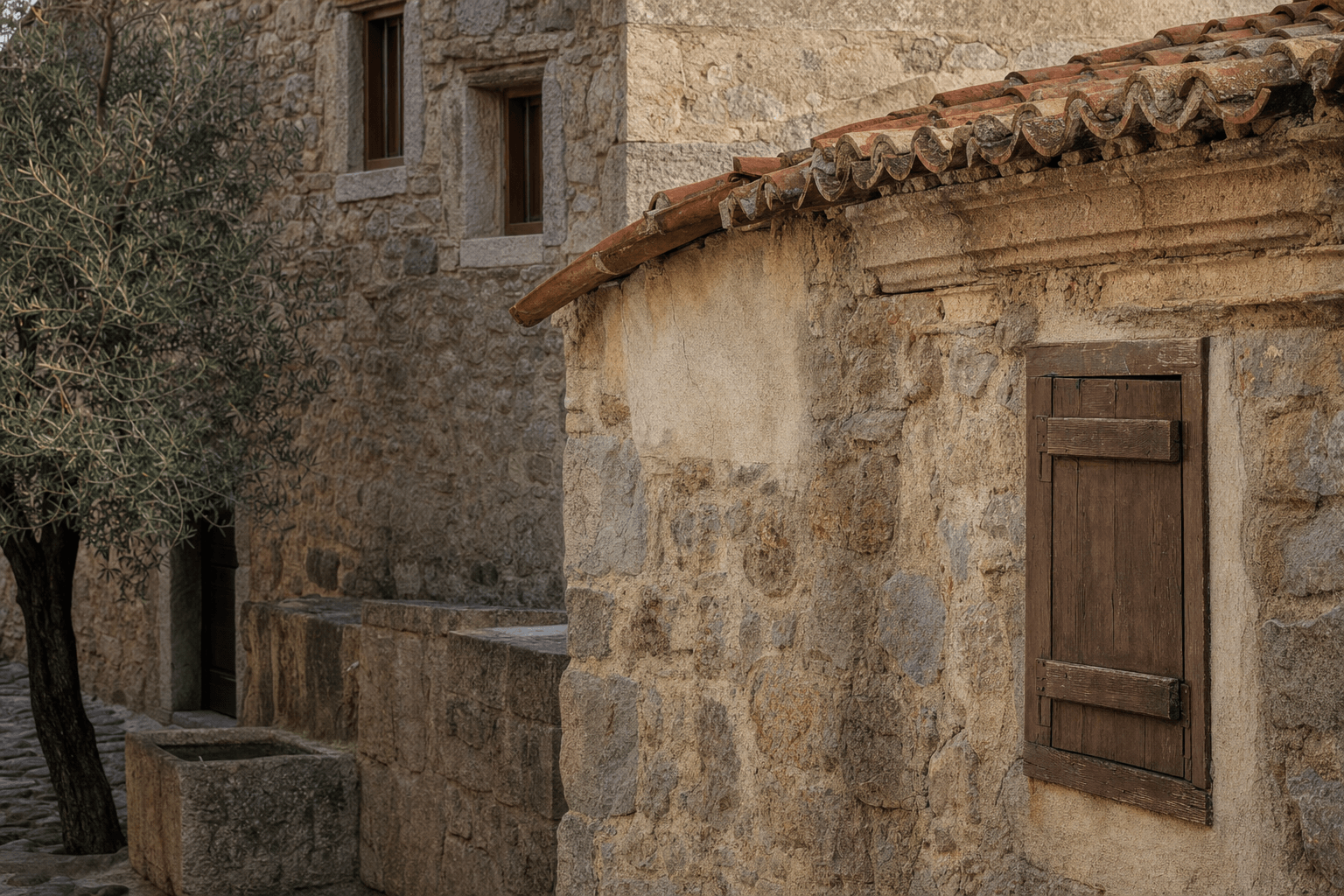
This is the wall itself. It is not stuck on as a thin facing. Thick stone lets the day’s heat into the room only slowly.
Lime plaster
It does not stop the stone from drying. Cement plaster leaves the winter damp inside the wall.
Clay tile
It carries the winter rain down to the lane. A flat roof holds water in this tight grain.
Timber frame
The leaf that faces the lane stays small. The light of the house is the opening onto the court.
Metal
Bare iron does not stay on a fixing near the harbour. Stainless steel or painted aluminium takes its place.
Wind
The sea wind passes through the court
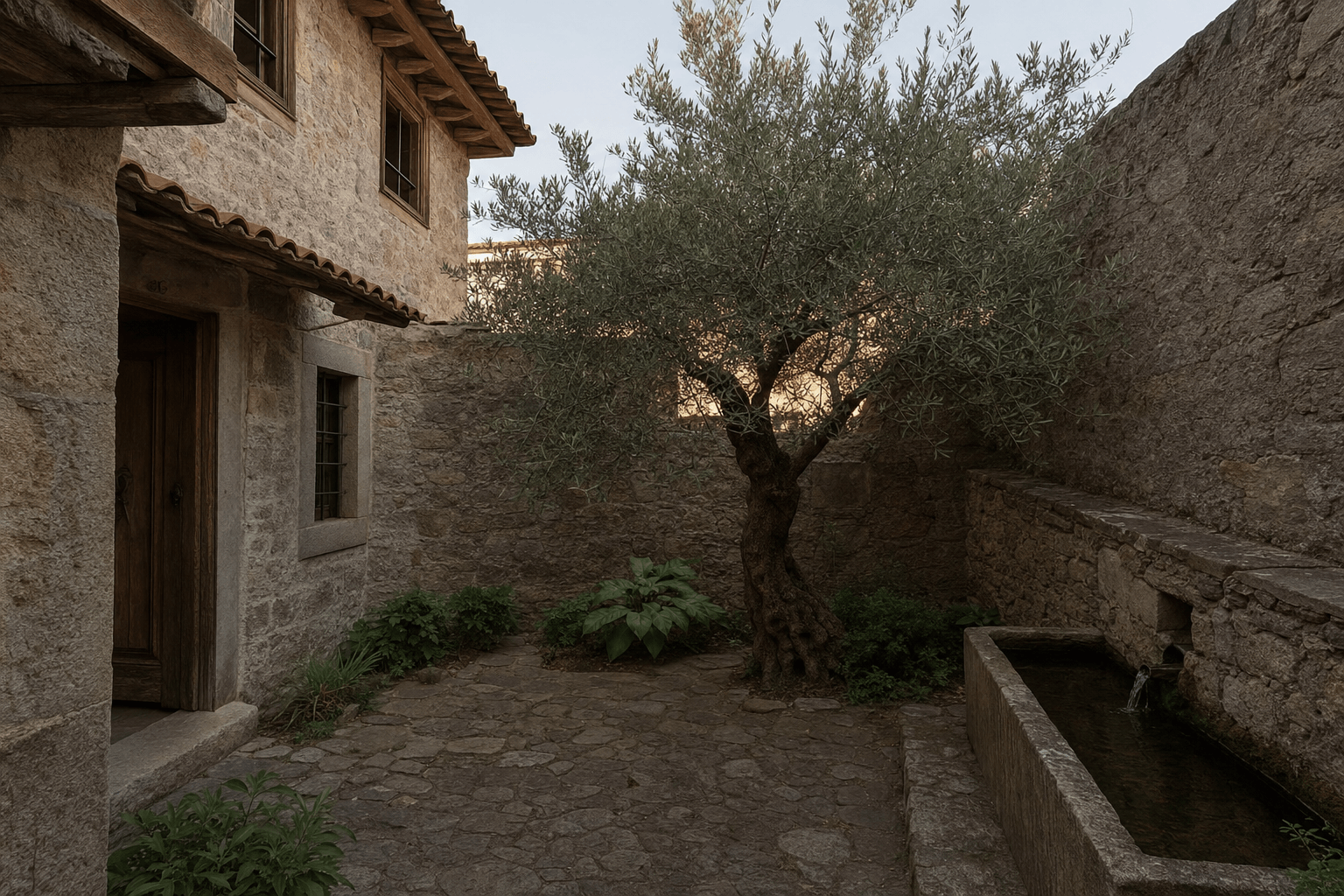
In summer the wind comes off the sea and through the channel between the islands. If the court opens to that wind by a gap, the house cools after noon. If a glass roof is set over the court, the same place becomes a box that holds the day’s heat until evening.
Iron that faces the harbour rusts quickly in salt air. The fixing is made of stainless steel or painted aluminium. A cement plaster that cannot breathe, spread over the stone, leaves the winter damp in the wall. The plaster is lime. Clay tiles carry the winter rain down to the lane. A flat roof holds water on this street.
The olive
If the tree is there, the house sits to it
There are olives on the slope at Ayvalık. The tree is not cut. The level of the house and the way it is approached are set from the tree, because it has already made its shade. A lawn asks for a separate way of watering through this summer, and it does not belong here. The ground stays stone and earth.
Where water is wanted, it is taken into the shade of the court as a narrow basin. A wide pool open west, toward the sea, throws the afternoon sun back onto the glass. That water stays in the court, not at the end of the view.
House Doctor notes
What works
Light is taken from the court. The window to the lane stays small. The court keeps a gap for the wind and is not closed with glass. The olive is not cut. Tiles carry the winter rain down. The plaster is lime.
Watch
An overhang measured for Bodrum does not bring light into this narrow lane. Closing the court with glass heats the house until evening. Cement plaster leaves the winter damp inside the stone.
This place
The essay is for the old tight lanes and the olive slope. A plan made for a south slope in Bodrum is not copied here. The wind comes through the channel. The rain waits until winter.
In the same place
Beside Ayvalık
- Cunda
- Sarımsaklı
- Altınoluk