
A house in Afghanistan is not a window onto the view. It rises from the earth, faces its court, and is slept on in summer. A thick wall is not a style. It is the tool of heat and of the boundary.
How it is built
- 01
Climate chooses the wall
Kabul sits at about eighteen hundred metres. Winter hardens, summer dries, and the air drops when the sun goes. The country is also earthquake ground. The old wall is thick for that reason. Pakhsa is rammed earth. A thin concrete shell does not carry the cool that earth hands to the night.
- 02
The house faces the court
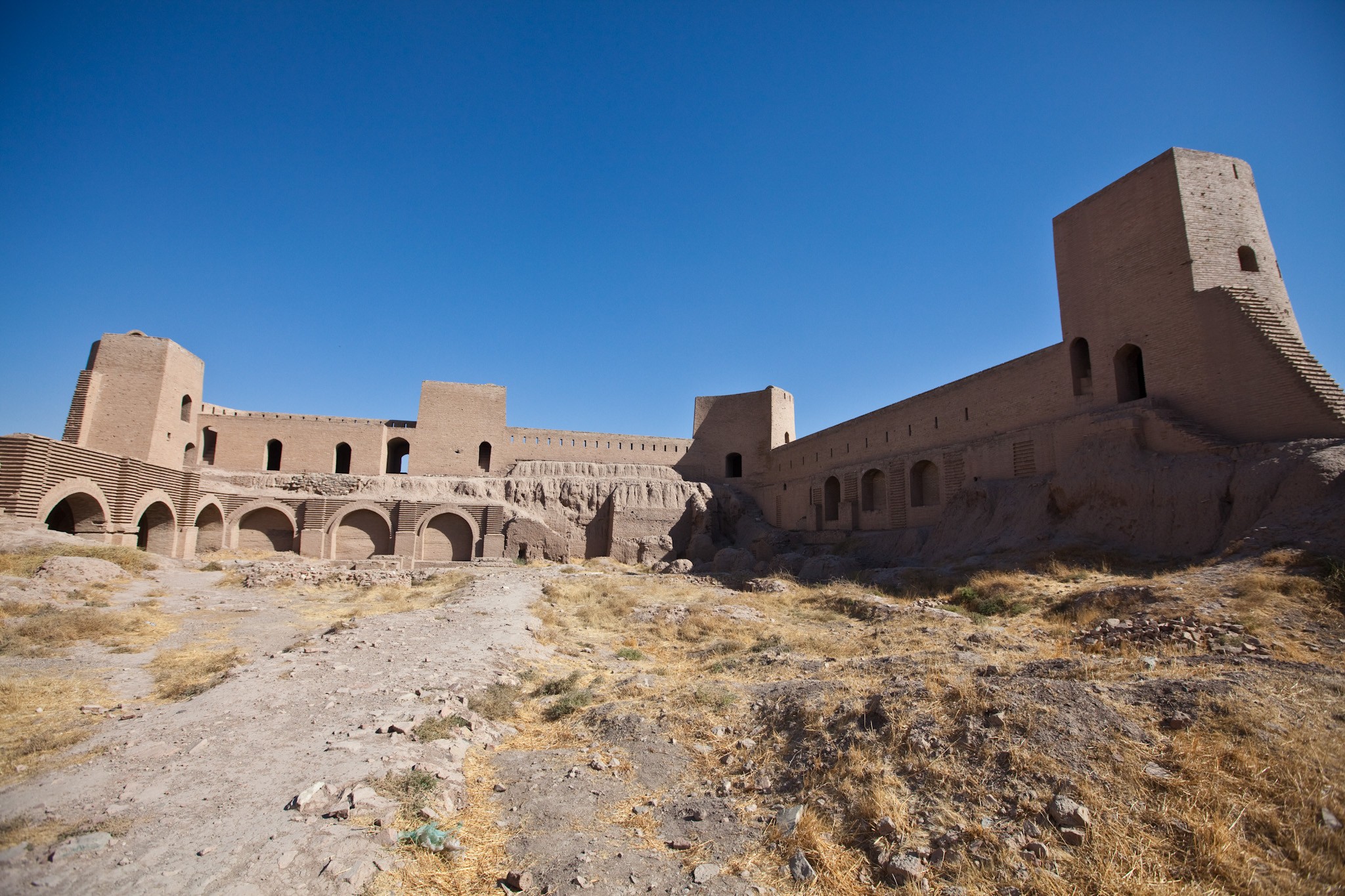
Life stays inside. A high outer wall cuts dust, wind and the glance. A guest is taken to a room apart from the family court. In the country this is a qala, a courtyard house. Corner towers are not a castle. They are the edge of the dwelling.
- 03
The roof is a room
The roof is flat. On a summer night people sleep on it. The joist is usually poplar, the cover earth plaster. The plaster is renewed every year. A house is not an object that is finished at handover. The season is its maintenance calendar.
- 04
One country, more than one language
Herat speaks in brick and glazed tile. Timurid geometry still stands in the Friday Mosque and in the citadel. To the east, in Nuristan, the house is several storeys and it is timber. A carved post is a different language from the earth court. Bamyan is a high valley: poplar, mud brick, cold. The niches in the cliff are an old inheritance. They are not today’s recipe for a house.
- 05
What concrete forgets
Cities have lately risen again in concrete frames. The question worth asking is not the price. Why was the old wall thick. Why was the court left open. Why was the roof kept flat. Earth holds heat. Unreinforced mud brick and careless concrete both come apart in an earthquake. Thickness was not nostalgia.